
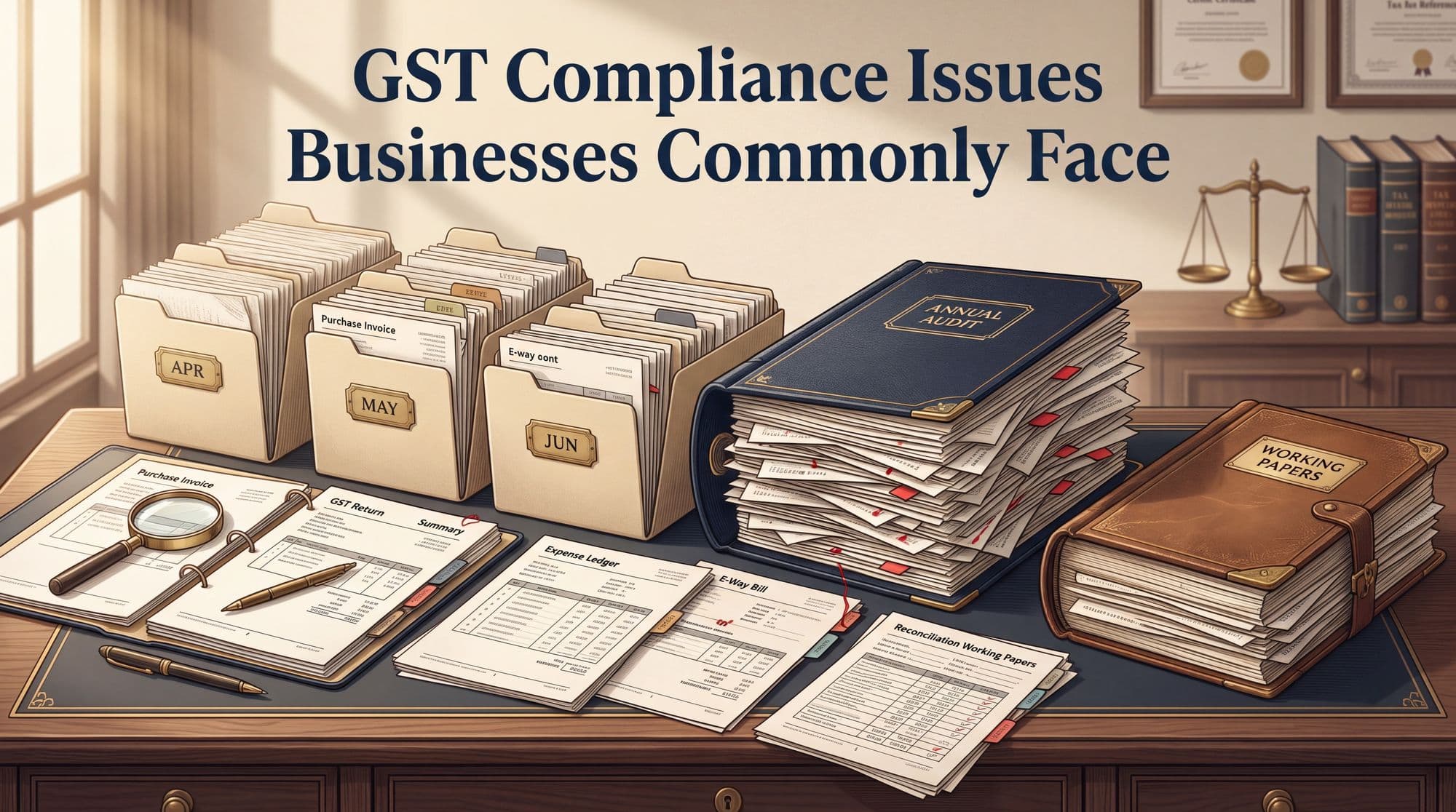
Exposure under GST rarely comes from an aggressive position taken deliberately. It comes from routine gaps that accumulate quietly over months and surface together during an audit.
The gaps that appear most often
Credit claimed without matching in GSTR-2B
Credit taken on the strength of an invoice in the books, without checking whether it appears in GSTR-2B, is the most common finding. The difference is usually small each month and substantial across a year.
Differences between GSTR-1 and GSTR-3B
Outward supplies reported in GSTR-1 that do not match the liability declared in GSTR-3B invite an automated intimation. Rule 88C provides for intimation of the difference and an opportunity to explain or pay.
Reverse charge left out
Freight, legal fees, director payments and imported services are often recorded as expenses without the corresponding reverse charge entry. This surfaces during audit and carries interest from the original due date.
Rule 42 and rule 43 workings not maintained
Businesses with any exempt turnover, including interest income in some situations, are required to reverse proportionate credit. The working is frequently prepared only at the year end, if at all.
The one hundred and eighty day rule
Credit on invoices not paid within one hundred and eighty days has to be reversed. Very few accounting systems flag this automatically.
E-way bill and invoice mismatch
Differences between the e-way bill and the tax invoice, in value, quantity or vehicle details, are used to question the movement of goods.
A monthly routine
Download GSTR-2B and reconcile it against the purchase register. Classify differences as timing, missing or ineligible.
Take up missing invoices with suppliers in writing the same month.
Reconcile the outward supplies in GSTR-1 with the liability in GSTR-3B and with the revenue in the books.
Prepare the reverse charge working from the expense ledgers, not from memory.
Compute the rule 42 reversal for the month.
Review invoices crossing one hundred and eighty days without payment.
Confirm that e-way bill data agrees with the invoices raised.
An annual routine
Complete the annual rule 42 and rule 43 true up.
Reconcile turnover as per the financial statements with turnover as per the returns, and document each reconciling item.
Confirm that all credit for the year has been taken within the outer time limit.
Review the classification and rate applied to each significant product or service line.
Close the vendor follow up for invoices still not reported.